Economist

Robert Boyer

Founder of the regulation theory, Robert Boyer has dedicated his career to a historical and institutional reading of capitalism, at the crossroads of economics, history, and social sciences.
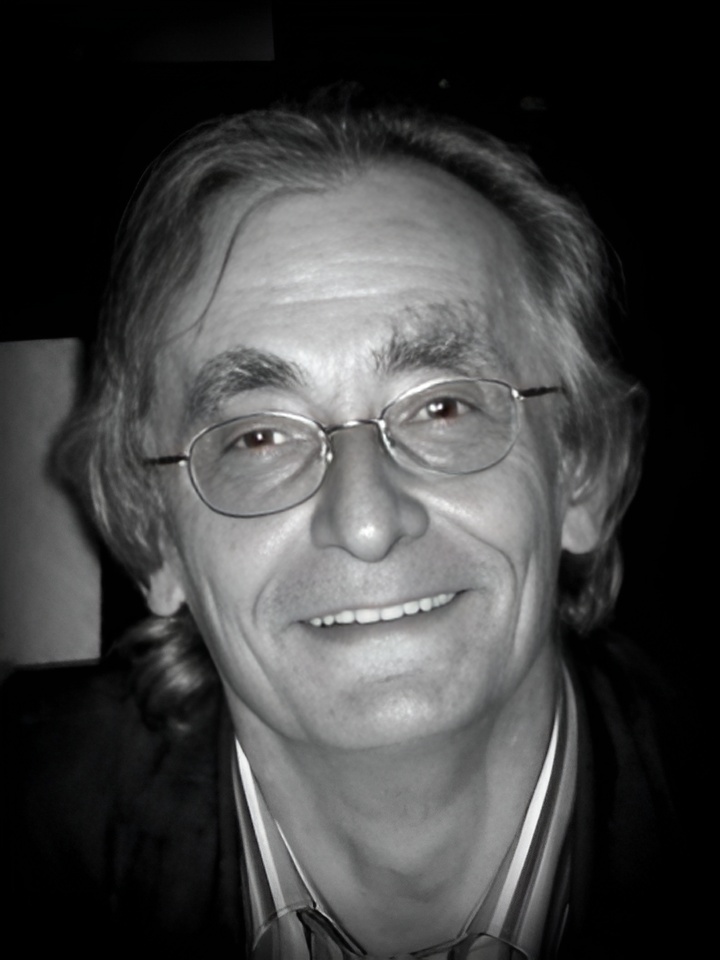
In a few words

A Career as a Heterodox Economist

Born on March 25, 1943, in Nice, Robert Boyer trained as an engineer (École Polytechnique, École des Ponts et Chaussées) before turning to economics, which he studied at Sciences Po Paris and then at Paris 1 and Paris 7 universities.

As an economist at CEPREMAP, research director at CNRS, and director of studies at EHESS, he developed, starting in the 1970s with others, the regulation theory — an approach that has become an international reference for understanding the diversity and crises of capitalisms.

Career Path

Positions and Roles

  • Associate Researcher — Institute of the Americas

    Paris

  • Fellow — Wissenschaftskolleg zu Berlin

  • Professor — Copenhagen Business School

    International Center for Business and Politics

  • Economist — GREDEG / CEPREMAP

  • Director of Studies — EHESS

  • Research Director (Exceptional Class) — CNRS

  • Economist — CEPREMAP

  • Member — Council of Economic Analysis

  • Visiting Professor — UNAM, Mexico

  • Visiting Professor — Yokohama University

  • External Researcher — Catholic University of Louvain

  • Expert — OECD ("Adult training")

  • Researcher — Ministry of Finance (Forecasting Directorate)

  • Expert — General Planning Commission (CERC)

  • Economist — Ministry of Public Works

  • Fellow — Max Planck Institute, Cologne

Recognition

Academic Distinctions

  • Doctor Honoris Causa

    UNMSM Lima (2018), University of Buenos Aires (2000), Catholic University of Louvain (2001)
  • CNRS Silver Medal

    1999
  • “Luis Federico Leloir” Prize

    International Cooperation in Science and Technology, Buenos Aires (2010)
  • Fellow — SASE

    Society for the Advancement of Socio-Economics (since 1998)
  • Advisory Board — Max Planck

    Max Planck Institute for the Study of Societies (2001 – 2008)
  • Scientific Committee — Centre Cournot

    Cournot Centre for Economic Research (since 2000)
  • Scientific Committee — Institute of the Americas

    Member since 2016

Research areas

Main Fields of Study

  • Institutional and Historical Macroeconomics

  • Innovation and Growth

  • Labor Markets and Wage Relations

  • International Comparisons of Regulation Modes

  • European Integration

  • Financial Crises

  • History of Economic Theories

  • Asian and Latin American Capitalisms

  • Welfare States